Road Renovations in Hungary in Autumn 2026: What Should You Watch Out for on the Motorways?
2026. 09. 21. 15:36
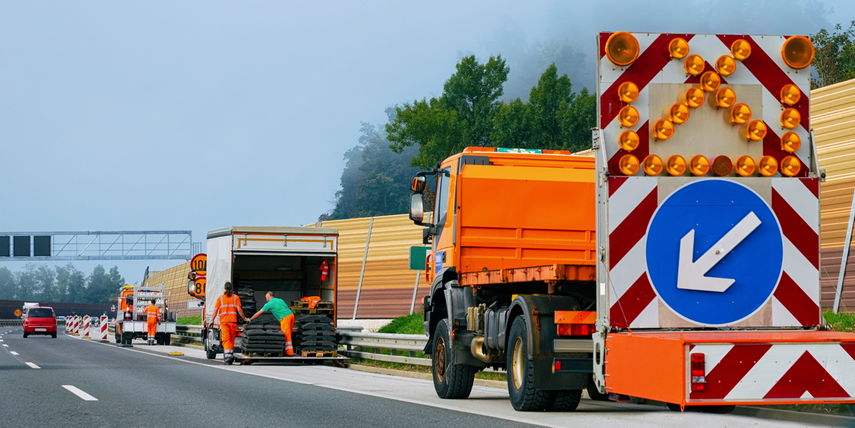
If we travel to or through Hungary by car in autumn 2026, when planning our route, we should take into account not only the journey time and the Hungarian highway vignette. Renovation works are underway on several major expressways, while a longer-term widening project on the M1 motorway is also affecting traffic.
In autumn, all this may be accompanied by rain, fog, earlier nightfall and more slippery road surfaces. Even a familiar highway can create a very different driving situation when we have to travel in narrowed lanes, along a temporary route or next to a construction site.
In this article, we summarise which Hungarian highways are affected by renovations in 2026, what to expect on the M1, how to prepare for driving in autumn, and what we need to know about e-vignettes if a diversion changes our route.
Which Hungarian Motorways Are Affected by Renovations in 2026?
The 2026 renovation programme affects six Hungarian expressways: the M1, M3, M30, M35, M7 and M70. According to the plans, around 630,000 square metres of road surface will be renewed, along with three bridges and five rest areas. The largest-scale resurfacing works are planned for the M3, M1 and M7 motorways.
As foreign motorists, it is important to know that this does not mean that all six roads will be continuously or completely closed. The works are being carried out in stages, so the location of construction zones and the current traffic arrangements may change even along the same motorway.
For this reason, it is advisable to check the latest information about the exact location of the works before setting off. Navigation apps can be useful for identifying congestion, but we should always follow the current road signs and temporary signage on site.
The Widening of the M1 Motorway Will Remain a Major Factor in Hungary in Autumn 2026
The M1 is particularly important for motorists arriving in Hungary from Western Europe. The motorway is one of the main routes between the Austrian border and Budapest, and a significant share of traffic arriving from Slovakia also reaches it via the M15 connection.
According to information published in September 2026, the widened carriageway towards Budapest between kilometre markers 16 and 54 had already received asphalt surfacing in several places. According to the plans, in autumn 2026 both directions of traffic, with two lanes in each direction, will be diverted onto this side, while major removal and reconstruction of the existing road structure will begin on the carriageway towards Győr.
If we are travelling from Austria towards Budapest or eastern Hungary, we should therefore expect to follow a route that differs from the usual alignment on some sections of the M1. Lane shifts, narrower traffic lanes, temporary speed limits and altered traffic arrangements at junctions may all occur.
In darkness or rain, these changes require particular attention. In such conditions, we should not simply follow the road layout we are used to, but pay close attention to temporary road markings, signs and traffic barriers.
The M3, M7 and Other Expressways Are Also Affected
The M3 is also among the Hungarian motorways most affected by the 2026 road renovation programme. Large-scale resurfacing works have also been planned on certain sections of the M30, M35 and M70.
On the M7, the road operator applied a special rule because of peak summer traffic around Lake Balaton. Between 20 June and 31 August 2026, no pre-planned resurfacing works were carried out in either direction on the section between the M0 and Balatonvilágos. However, this summer restriction ended at the end of August, so before travelling in autumn, it is once again advisable to rely on the latest traffic information.
This is particularly important if we are travelling on the M7 towards Budapest, Lake Balaton, Croatia or Slovenia, or if our route also includes the M70.
Why Can Driving Through a Motorway Construction Zone Be More Difficult in Autumn?
A lane shift is easier to assess on a dry, bright summer day than on a foggy or rainy October morning. In autumn, visibility may be reduced and braking distances may increase, while diversions leave less room for error.
We should pay particular attention to sudden lane shifts, temporary road markings, narrower lanes through construction zones, changing speed limits, and traffic that suddenly slows down or comes to a standstill at the end of a queue.
On wet roads, it is advisable to maintain a greater following distance and reduce our speed to suit the road conditions. Autumn and winter road safety recommendations issued by the Hungarian police likewise emphasise the importance of slower, more cautious driving and greater following distances.
Rain, Fog and Earlier Nightfall: How Should We Prepare for the Journey?
In heavy rain, visibility decreases and the risk of aquaplaning increases. Choosing an appropriate speed becomes even more important in these conditions, especially in a construction zone where lanes may be narrower.
In fog, reaching the maximum permitted speed is likewise not the goal. We should drive at a speed that allows us to stop safely within the distance we can see. High beams can actually reduce visibility in dense fog, so we should always use lighting appropriate to the conditions.
Before a longer autumn journey, it is worth giving the car a quick check as well:
- check the headlights, rear lights and indicators;
- inspect the windscreen wiper blades and windscreen washer fluid;
- check the condition and pressure of the tyres;
- clean the windscreen and lights;
- in colder weather, make sure the vehicle has tyres suitable for the season.
In Hungary, the use of winter tyres for passenger cars is currently not a general legal requirement, although the police specifically recommend them in cold, wintry conditions. When travelling from abroad, we should also bear in mind that winter tyre and snow chain regulations in other countries along our route may differ from Hungarian rules.
How Should We Plan Our Route in Autumn 2026?
If we are travelling several hundred kilometres through Hungary, it is advisable to allow some extra time. A minor traffic jam at a construction zone may not necessarily cause a significant delay on its own, but combined with an accident or heavy rain, it can quickly increase journey times.
For longer journeys, it is also worth planning rest stops in advance. Hungary’s 2026 work programme also includes the renovation of rest areas, so temporary restrictions may apply at some locations. If we are travelling in an electric car, it may be particularly useful to check in advance where the next suitable charging point is located.
Do We Need a Hungarian Highway Vignette When Following a Diversion?
It is important here to distinguish between an officially designated diversion route and an alternative route we choose ourselves.
If, because of a road closure or traffic restriction, the road operator, police or another authorised body officially designates a normally toll-road section as a diversion route, the rules may, under certain conditions, allow that section to be used without an e-vignette. Unless otherwise stated, this generally applies only to the section between entering the toll road and the first available exit at the next junction.
The situation is different if, for example, we decide to enter a toll motorway on the recommendation of a navigation app in order to avoid congestion. This does not in itself provide a toll exemption: in this case, we need a valid Hungarian e-vignette.
What Happens If We Accidentally Enter a Hungarian Toll Road Without an E-Vignette?
Under Hungarian regulations, the e-vignette required to use a toll road should generally be purchased before entering the toll section.
However, if we enter the toll road network in good faith by mistake, we have up to 60 minutes from the time of entry to purchase the appropriate road-use authorisation.
Nevertheless, the simplest and safest solution remains to purchase the e-vignette before entering a toll highway in Hungary.
For vehicles with foreign number plates, we should pay particular attention before purchasing to entering the registration number and country code correctly, as well as selecting the correct vehicle category and validity period.
Summary
Due to road renovation works in Hungary in autumn 2026, we may encounter temporary traffic arrangements on several major motorways. The widening of the M1 may cause particularly significant changes on the route between Budapest and western Hungary, but renovation works are also underway or expected on certain sections of the M3, M30, M35, M7 and M70.
If we are driving to Hungary in autumn, we should check the latest road information before setting off, allow some extra time, and always follow the signs in place at construction zones. In rain, fog or darkness, we should reduce our speed and increase our following distance.
Buy a Hungarian E-Vignette Before You Travel
A significant proportion of Hungary’s highways and expressways are subject to tolls, so it is worth checking before travelling which e-vignette we need. At hungary-vignette.eu, we can purchase the appropriate Hungarian e-vignette online, allowing us to enter toll road sections with a valid road-use authorisation already in place.
Frequently Asked Questions
Where Can We Expect Major Changes on the M1 in Hungary in Autumn 2026?
According to the information published in September, between kilometre markers 16 and 54, both directions of traffic, with two lanes in each direction, will be diverted onto the widened carriageway towards Budapest while reconstruction continues on the other carriageway.
What Should We Pay the Most Attention to When Driving on Hungarian Highways in Autumn?
In addition to rain, fog, slippery road surfaces and earlier nightfall, narrower lanes and temporary road layouts at construction zones require extra attention. Driving at a speed appropriate to road and visibility conditions and maintaining a greater following distance are particularly important.
Do We Need an E-Vignette If We Have to Enter a Toll Road Because of an Official Diversion in Hungary?
Not in every case. If the authorities or the road operator officially designate a toll road section as a diversion route, use without an e-vignette may be permitted on a specified section unless otherwise indicated, typically as far as the first available exit. However, an alternative route suggested by a navigation app does not automatically qualify as an official diversion.